An 8 hour drive to the east, over the Western Ghats, and we arrived at our first stop Hampi, Karnataka. Covering approximately 16 square miles, the site, designated a UNESCO World Heritage site in 1986, is vast and never ending in temples and ruins.
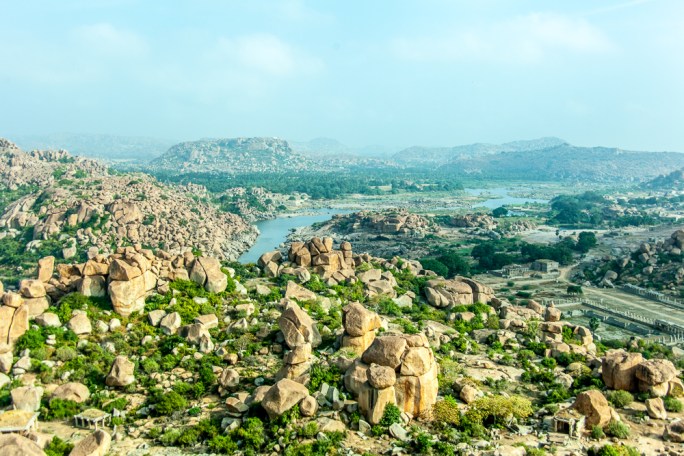
The site has around 1600 monuments to view, although we didn’t quite manage to see all of these. Most of the monuments are Hindu, a few Jain, and a Muslim mosque and tomb. With suggestions during excavations that the town existed in 2nd Century BC, it developed into becoming the centre of the Hindu Vijayanagara Empire capital in the 14th century AD. The empire was defeated, conquered and destroyed in 1565 leaving it in ruins.


Hampi continues to be an important religious centre, housing the Virupaksha Temple. The Temple can be seen from far around, and makes an impression on the landscape when viewed from the top of the near by Matanga Hill. Veerabhadra Temple sits atop this hill, which remains to this day an important place for pilgrims. The path up to the top of the hill was formed many centuries ago is still intact, with steps chiselled out and stones strategically placed to guide you.


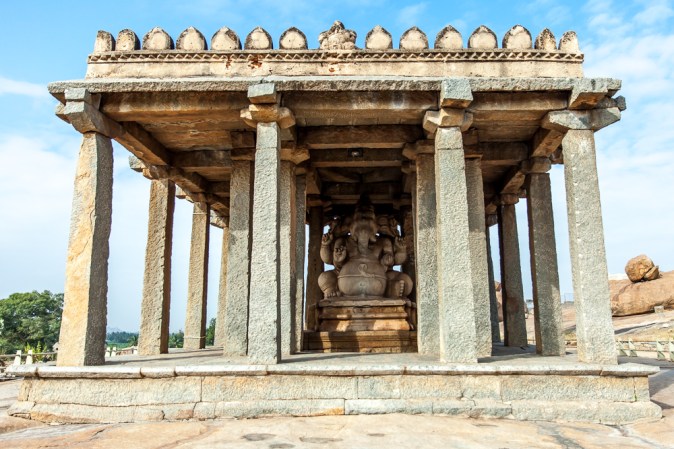
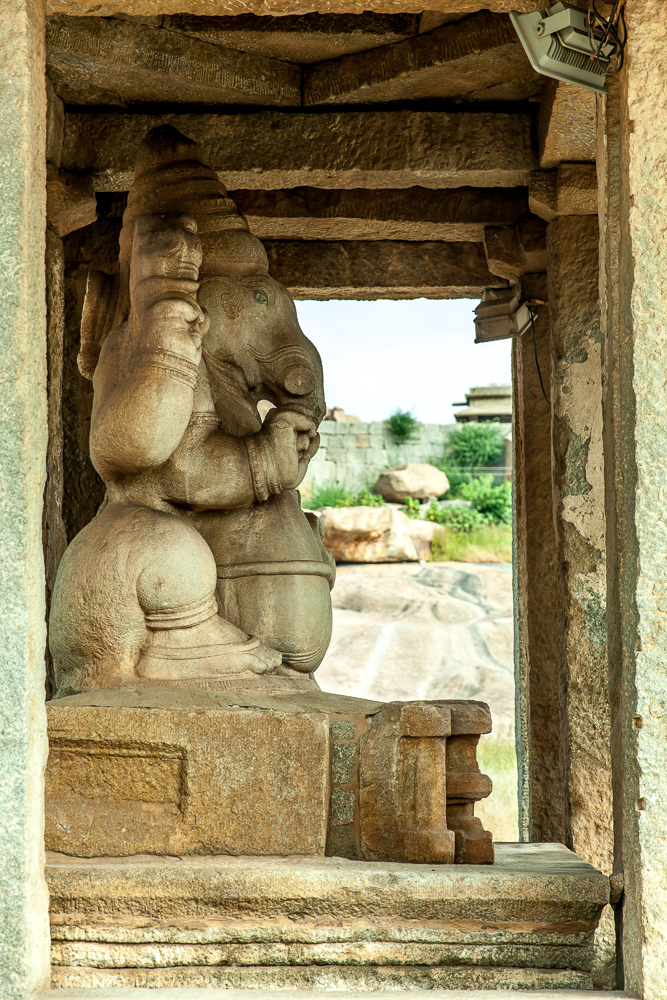
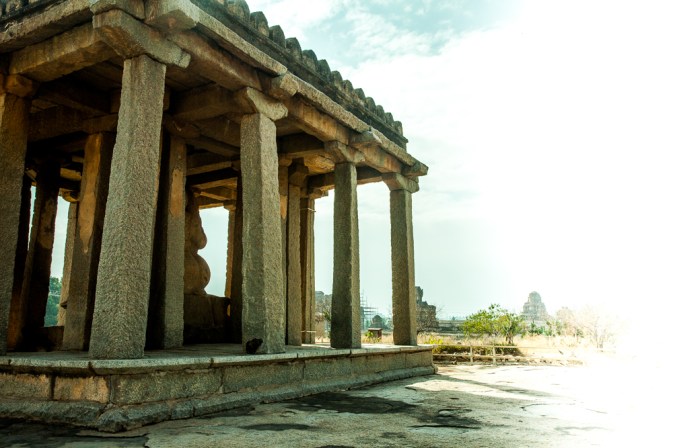
Sasivekalu Ganesha Temple was just a 2 minutes away from the guesthouse we stayed in, and was the first monument we went to see on our first day in Hampi. Approximately 2.4m high this Ganesha statue is a monolith, carved from one large boulder. An inscription noted on the temple dates it to 1500AD.
In what is called the ‘Royal Centre’ lies two significant building, the elephant stables, and the Lotus Mahal. The stables consists of 11 arches openings into large chambers where elephants would have been kept. Each chamber has been designed with different shaped domes, circular, octagonal, ribbed and fluted.
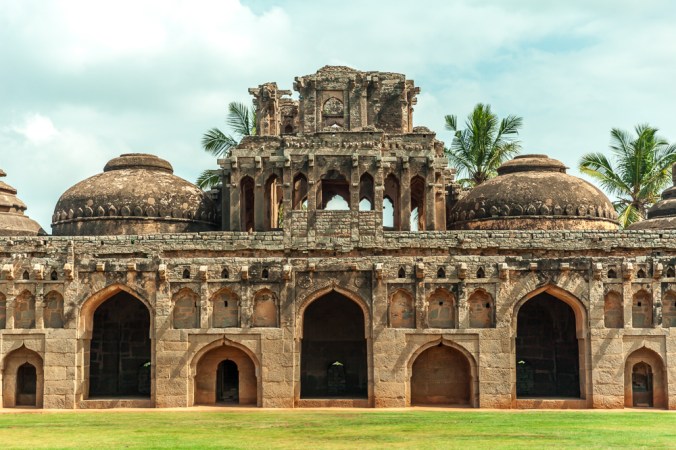
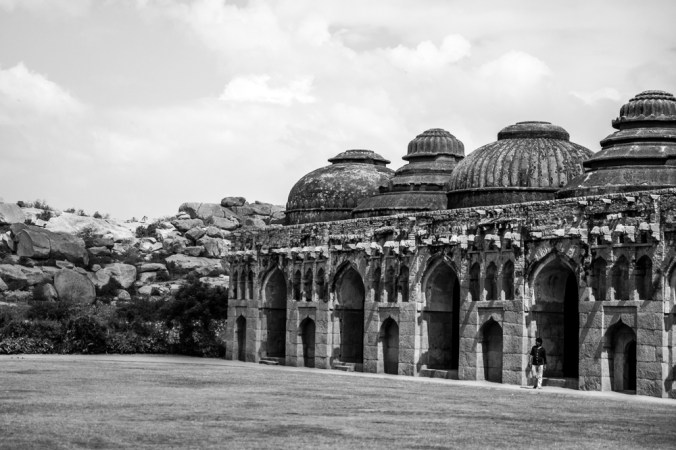
The Lotus Mahal has no writing or inscriptions on the walls and so historians have found it difficult to date or understand the usage of the building.


On the subject of boulders, unlike most mountain ranges, the piles of boulders of Hampi were not formed as a result of volcanisms or of any uplift in the earth’s crust. The boulders were once part of gigantic granite monoliths (massive mountain of rock). This geology perspective along with Hindu mythology opinion on the subject can be read here: “Origins of Hampi’s boulders”
There are many monkeys around Hampi, always happy to have their photograph taken in exchange for a banana. Although some monkeys maybe got out the wrong side of bed and show their teeth and a complimentary growl to show you that they’re not up for photographs today.


 On the Move
and we in the west think that we have interesting places to visit-! all this in one place is amazing keep goig grandma
LikeLike
Looks amazing, I can see you are going to be our route master for our next visit
Namaste 🙏🏽
LikeLike