After the pink city came the blue city, Jodhpur. The city was founded in 1495 by Rao Jodha, hence the name. Jodha was part of a royal family who took great pride in their warrior and equestrian skills. In the late 1800s, the king of that time was not satisfied with the garments he was wearing during his time on his horse and set about designing a new garment to meet the needs of the game.
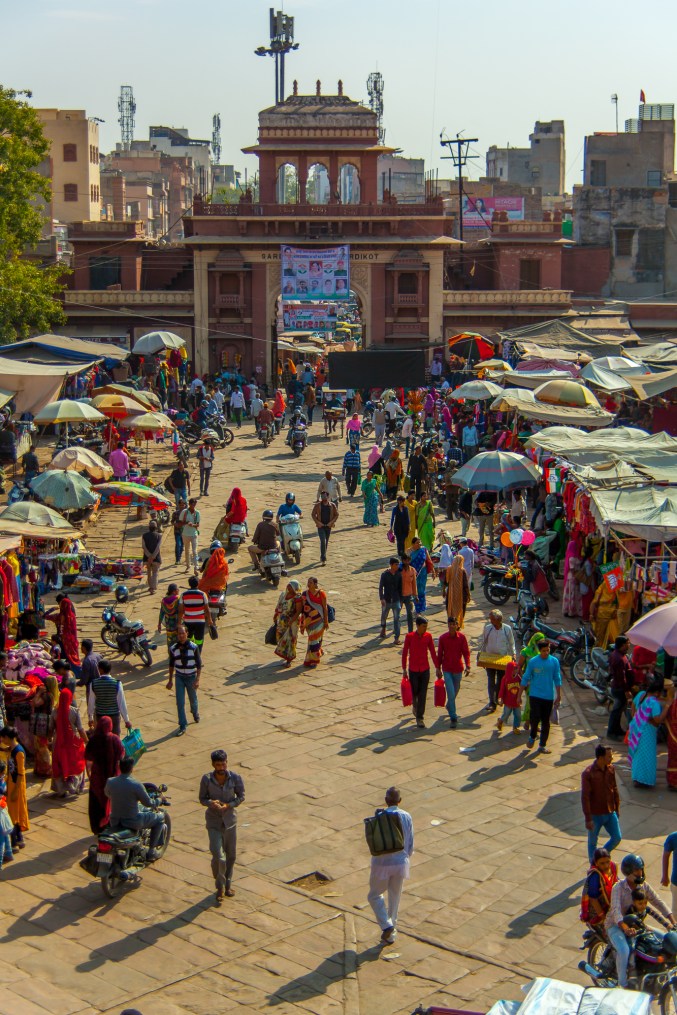
On our first morning in Jodhpur we signed up for a walking tour with Yo Tours who guided us through the lanes of the new city and the old city. We started at Ghanta Ghar, a clock tower surrounded by stalls selling everything you could imagine, a real hustle of activity happening around us.
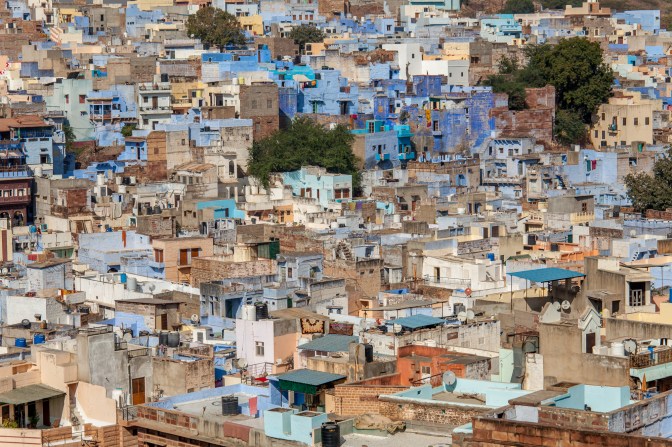
We then ventured into the city where our tour guide nearly got ran over multiple times; she didn’t seem too bothered though. The tour ended in the old city, the area of blue houses. From here we continued to wander and found a beautiful city vantage point by climbing up towards the fort. At the top we were able to see down onto the old city and capture that iconic shot of blue houses disappearing into the distance.
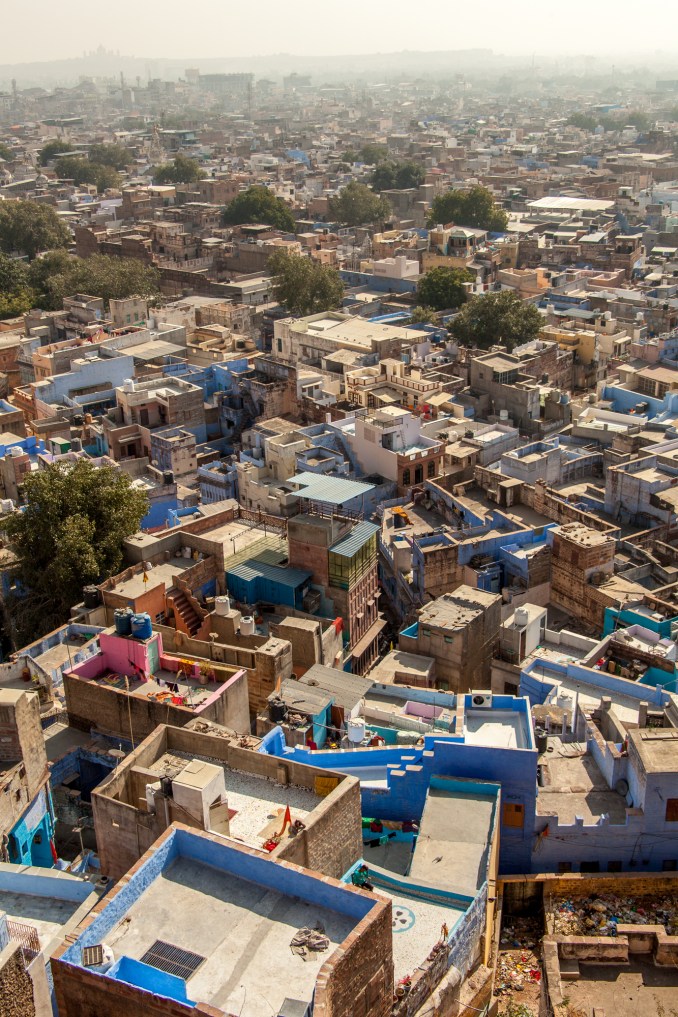
Many of the buildings in the old city remain blue, painted with a natural indigo dye. Today, the city council are encouraging building owners to use the natural indigo paint when repainting the exteriors to ensure the heritage of the city is retained. To support the cost of repainting the council are providing a monetary contribution to those that do. It is a vast difference in colour when comparing two houses next to each other with one in the natural indigo dye and the other in a generic outdoor paint. It is good to see the city council understanding that preserving the heritage of the city is important for the future. Walking around the old town gave many opportunities to capture little glimpses into the courtyards that exist behind gates on the road.


Why are the houses blue? There are many theories from history, the main one being that the blue colour helps to keep the houses cool under the heat of the sun. Another theory is that the blue colour is associated with the Brahmins, an upper caste in India, thus the blue houses belong to families of that caste. This is why sometimes the blue houses are referred to as Brahmin houses.


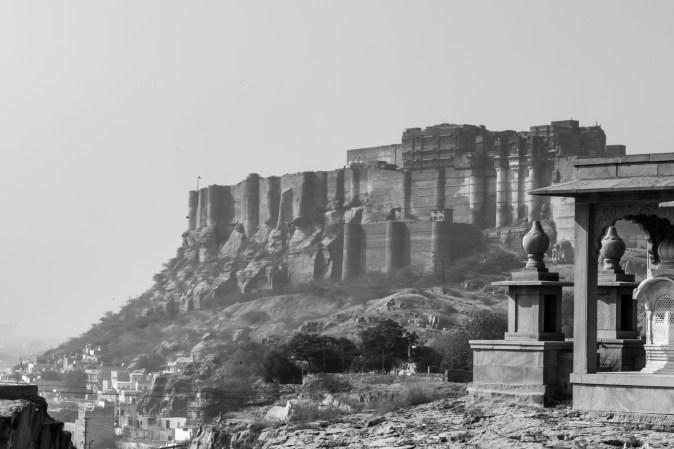
The city is dominated by Mehrangarh fort which sits atop an elevated piece of land, overlooking the city below. Building commenced in the 15th century and continued for a period of 500 years, with subsequent rulers adding to the fort. We did not visit the fort inside, but viewed it from outside and from down below in the city in our Haveli.


Jodphur recently appeared on the BBC show ‘The Real Marigold Hotel’ where the celebrities made a trip to the city to play some polo.
 On the Move