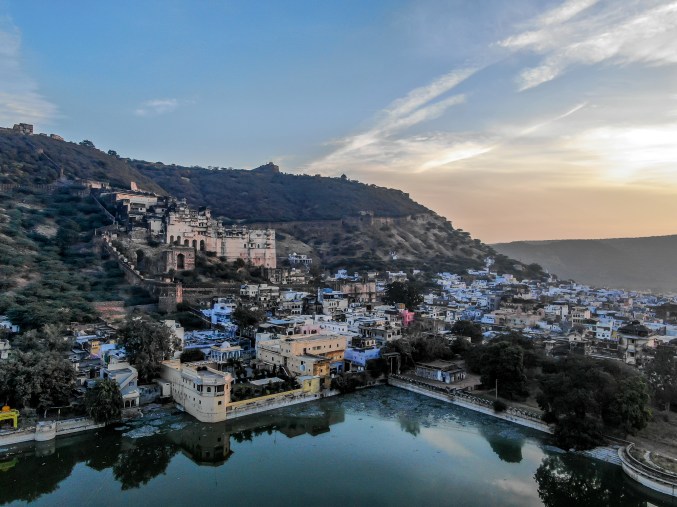
Located between Udaipur and Agra, Bundi is a small town with plenty of stepwells to see. With over 50 stepwells there are a lot of steps to climb.


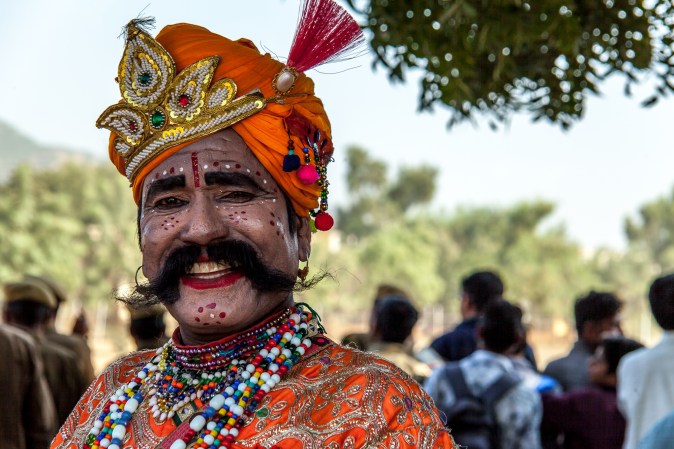
We arrived unknowingly the day before the annual Bundi Utsav (fair) which takes place over three days. The first day being the main event with a parade through the town and a number of competitive events held on the Police Parade Ground in the town.


Before the events got under way, there was a chance to meet with the people who joined in the parade who were more than happy to have their photograph taken. Many also wanted to have a photo taken with a foreigner so I also posed for many photos that morning.
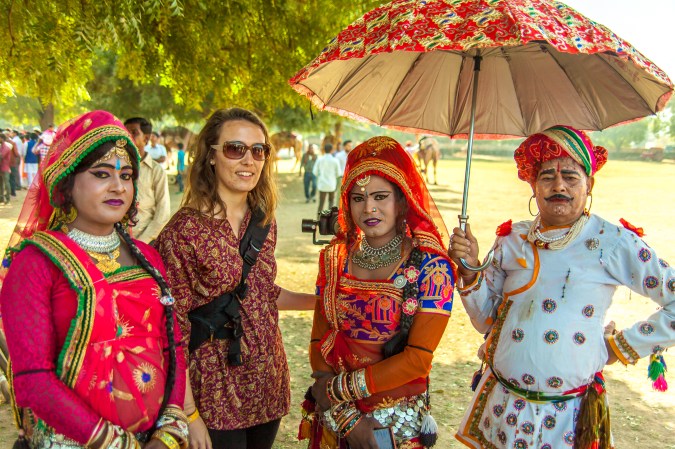
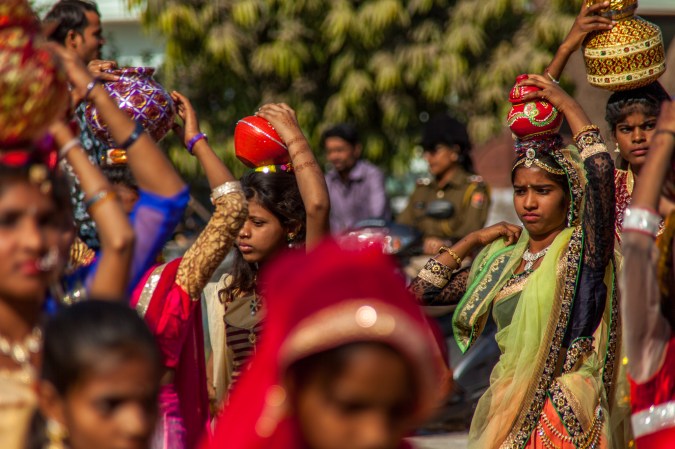
The was a competitive a panihari race which is a race where the competitors carry an earthen pot on their head full of water. A horse race and camel race were also part of the Utsav, as was a turban tying competition and tug of war between foreign visitors and Indians.


After seeing the Utsav, we walked into the main town of Bundi to take a look at just two of the many stepwells that there are in this area. The first we saw was an abandoned stepwell called Nagar Sagar Kund which is approx. six storeys deep. It is unfortunately in a bad state with stagnant water and lots of rubbish at the bottom.


Stepwells were generally built in populated areas to provide water to the local people during times of drought. The British however, during their occupation of India, considered stepwells to be unsanitary and places of disease and so created new sources of water with new bored and drilled wells. Since this, stepwells are no longer used today and are often found with dirty, littered water lying at the bottom.


Ranji ki Baori, also know as the Queen’s stepwell is set in landscaped gardens in the centre of town. Before entering the structure we were not expecting what appeared. A magnificent tall structure which stepped down and even further down to a more well maintained well of water. It is a total of 46m deep from bottom to top, built in 1699 by Rani Nathavati Ji a young queen at the time. Ornate carvings cover the structure with no space left uncarved.


During our visit to Ranji ki Baori, a group of off-duty police men were more than obliging when we asked them to pose for our photographs. As were a group of girls who were also in town for the Utsav.


Along the road from Bundi to Agra, we visited another stepwell called Chand Baori located in a small village called Abhaneri.


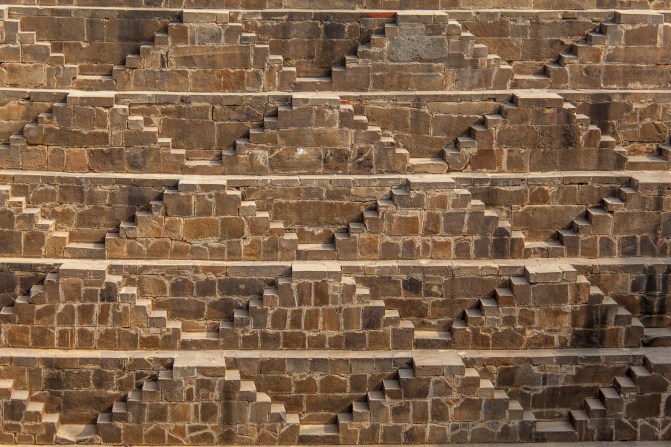
This particular baori consists of 3500 steps and 13 stories and extends 30m into the ground. Built by King Chnada during the years 800AD to 900AD, the structure was dedicated to the Goddess of Joy and Happiness. One side of the well has no steps and provides resting places for the royals.


The design of the stepwell shades body of water from the hot sun of Rajasthsan. It is said that at the bottom of the well, the air temperature is five to six degrees cooler than at the top of the well. The complex patterns that the stairs make as they descend down into the well may remind you of some of M.C.Escher’s work. This stepwell was used in ‘The Best Exotic Marigold Hotel’ so keep an eye out for it when you next see this movie.
 On the Move
Great writeup.
LikeLike