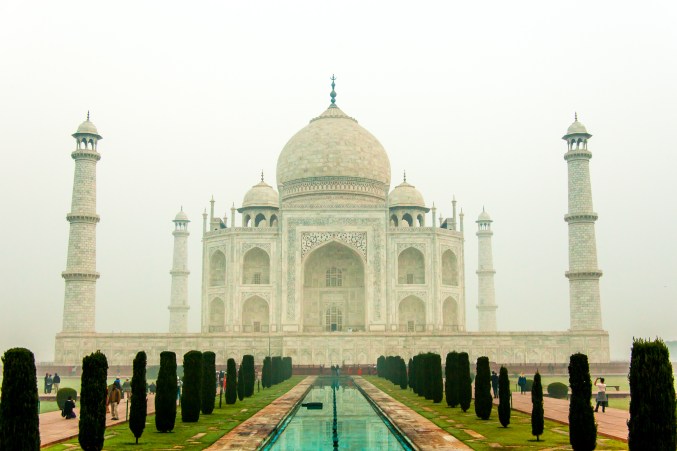
The Taj Mahal needs no introduction.


To provide a bit of history about the building other than just some photographs; the mausoleum was built by Mughal Emperor Shah Jahan in memory of his wife, Mumtaz Mahal. Construction of the complex took 21 years from 1632 to 1653 AD. It is built on the banks of the Yamuna River in a vast Mughal garden.


For our visit, we rose before the sun to reach the ticket counter before it opened. Just three people were in front of us. I was in the foreign line (the expensive line), whilst Cliff stood in the Indian line (the cheap line), saving us 1000 INR on tickets. After picking up the tickets, we then went to stand in the security line which has separate lines for men and women. Once through this, we were let loose into the complex. All this before the sun rise so you can imagine what time we got out of bed. Only about 20 or so people were there before us in the complex, so this was our chance to take that classic photograph of the long manicured gardens leading up to the mausoleum. At this time in the morning the fog was quite dense so the main building was not particularly clear. We had to wait for later for some clearer photographs.
(queue classic photo)
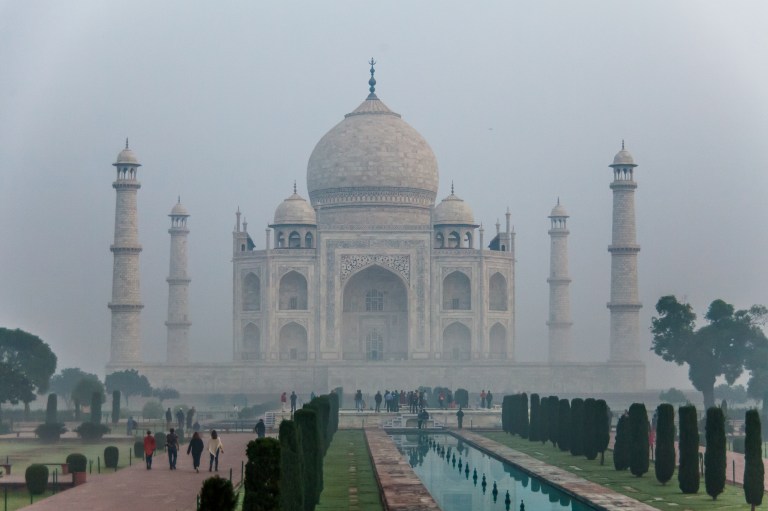
We both appreciated the painted blue bases of the pools in the gardens of the complex, which provided a magnificent vibrant colour for the foreground of photographs, set to the side of the white marble of the main mausoleum. The long walk from where we entered the complex at the west gate, provides plenty of opportunities to take photographs from many angles.


In Agra, the Taj Mahal is the main attraction and draws 7 to 8 million visitors every year to see the spectacular structure. Designated a UNESCO World Heritage site in 1983, the Taj is also now featured in ‘New Seven Wonders of the World’ list.
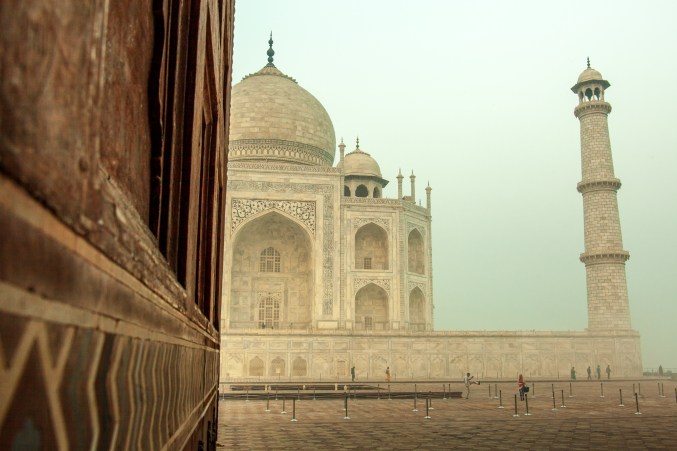
If you wish to read more into the UNESCO listing of the Taj, you can find many more interesting facts and features of the building here.
One of the most popular myths of the Taj Mahal is that Shah Jahan had chopped off the hands of the craftsmen and artisans who built the monument in an attempt to stop them building another monument more wonderful than the Taj Mahal. This legend has, fortunately been proven false.


The Taj Mahal has recently undergone its first deep clean since it was constructed in the 17th century using an ancient mud mask technique called ‘fuller’s earth’. The clay is applied to the yellow marble and then washed off using distilled water to reveal the white marble. After many years of pollution, monsoons and bird pooping, the Archaeological Survey of India commissioned work to commence in early 2017 and conveniently finished in September 2018 just a couple of months before we made our visit. The dome is still awaiting its deep clean and it is rumored that this will be undertaken during the off season in 2019. I found this website that keeps up to date with the cleaning process and where the information above has been taken from.
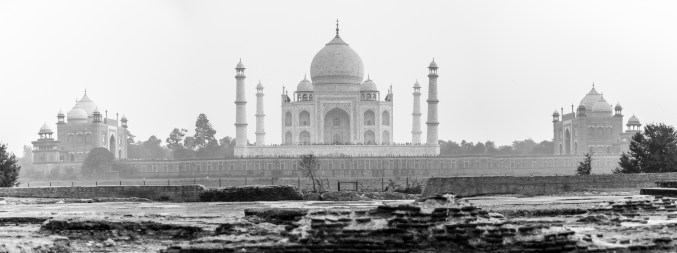
For sunset (after sleeping all day to catch up on sleep) we got in the car to hop to the other side of the Yamuna River to view the Taj Mahal from a different angle. The garden complex that is directly opposite is called Mehtab Bagh and of course has an entry fee. Mehtab Bagh, translated means Moonlight Garden. It is square in shape and lines up perfectly with the Taj Mahal on the opposite side of the river. Emperor Shah Jahan designed the gardens as an integral part of the Taj Mahal complex. The gardens stand in the flood plains, and so after many centuries of flooding and local people removing materials, today the gardens are not much more than grass and rubble. But there was evidence of works being undertaken to restore the gardens.


At sunet from across the river, we were able to see the extensive queues that have formed during the day for entrance into the mausoleum. (photograph below). Be sure to visit early in the morning for sunrise to avoid these queues on your visit.


When you visit the Taj Mahal on your trip to India, be sure that when taking a photograph, either before or after, to put the camera down and look with your own eyes at the architectural splendour that is before you. It is considered to be the greatest architectural achievement of Indo-Islamic architecture. You may never be there again, enjoy it, see it, take it in.
 On the Move
Think we need to visit the Taj Mahal too! Great photos
Mum and dad x
LikeLike
Wonderful photos, bringing back memories of our visit last year.
X
LikeLike